
Mark and report07 / 11
Ask any two schools how a report card is calculated and you get two different answers.
Which is why most software hard-codes one of them and asks everybody else to adapt. Weightings, rounding, what appears where, what a grade boundary is: these are decisions your school has already made, usually decades ago, and they are not negotiable because software finds them inconvenient.
The problem today
Entered twice, weighted by hand, rounded by accident.
- Marks are entered into a spreadsheet, then again into a report card template.
- The weighting between theory, practical and internal assessment is applied by formula, by hand.
- Rounding is whatever the spreadsheet does, and nobody has decided what it should be.
- A reissued report card overwrites the original.
- Producing report cards takes one person a full week, every term.

What EduBold changes
Your scheme, configured. Not ours, imposed.
Mark and report/Yours to set
- Component weights
- Rounding rule
- Grade boundaries
- Component order
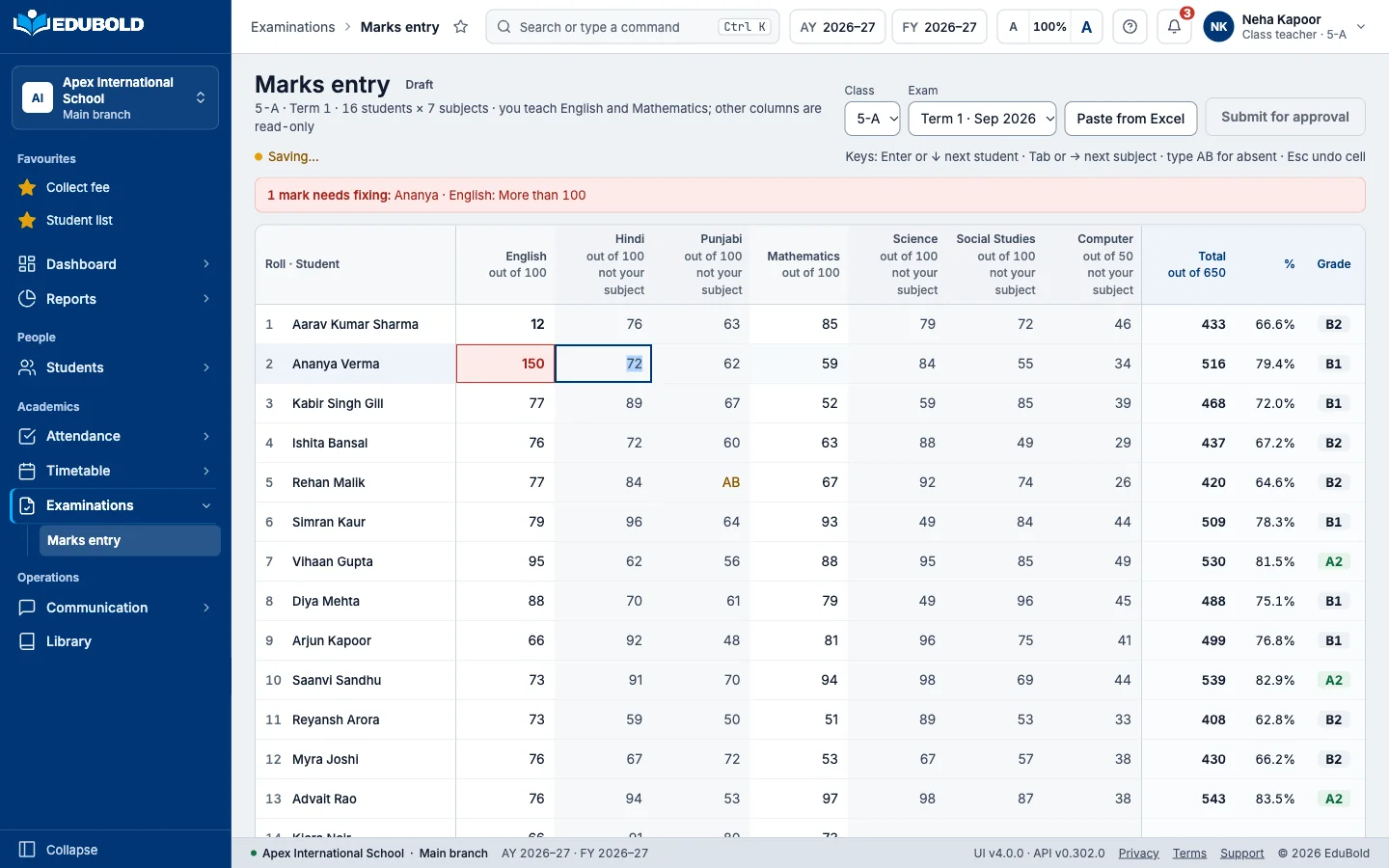
The calculation is yours to configure
Report card configuration is exactly that: configuration. Subject-level and component-level calculation are separate concerns, so a subject built from theory, practical and internal assessment computes correctly rather than roughly.
Rounding is an explicit choice. Whether 89.5 becomes an A or a B is your school’s decision, made once and applied consistently, rather than an accident of how a formula was written.
Component ordering is a choice too, so the card prints in the order your school has always printed it.
Grade boundaries are data
Marks map to grades through lookups with upper and lower limits that you maintain. Change a boundary without changing software.
Grading schemes import in bulk, so setting one up is a spreadsheet rather than a data entry exercise.
Weighted assessments
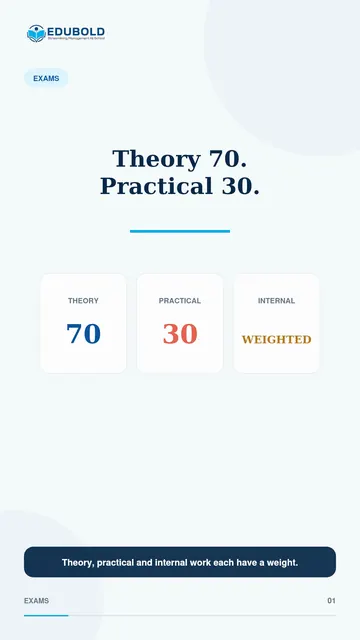
Assessment types cover final examination, mid-term, class test and whatever else your school runs. Components combine into a subject mark by weight.
Pass status and percentages are calculated, overall and by subject, rather than typed.
History is kept
A reissued report card does not erase the original. Both exist, in order.
Every school has had the conversation about which version of a card a parent is holding. This ends it.
Assignments, tracked
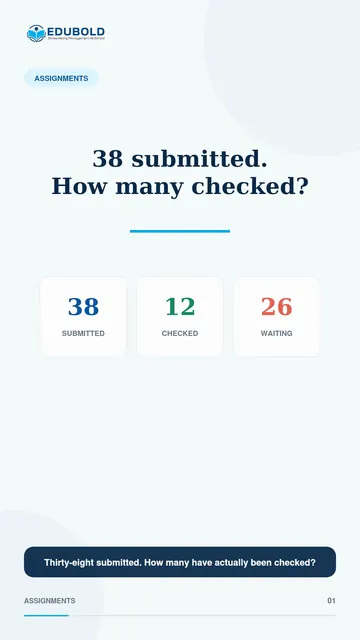
Set work to a class, students submit with file attachments, and late work and unmarked work are things the system points at, rather than things a teacher has to notice.
Assignments version. Correcting a badly worded question creates a new version, keeps the history, and can be reverted.
The detail that decides it
A teacher can correct homework after setting it, and nobody loses the original.
A teacher sets homework, then realises question four is ambiguous, and edits it. In most systems, that edit is silent and permanent.
The students who already answered the original are now answering a question that no longer exists, and nobody can prove what was asked.
Here it creates a new version. The history is kept, and it can be reverted.
This is a small thing that becomes a large thing exactly once, in a dispute, in front of a parent.
For the management committee
The document a school is judged by.
The calculation behind a report card is usually undocumented and held by one person. Making it configuration rather than convention means it can be reviewed, agreed and changed deliberately. Report card history means a reissued card is auditable.
Bring your own report card format to the demonstration. We will show you the scheme built to match it, on your subjects and your grade bands.
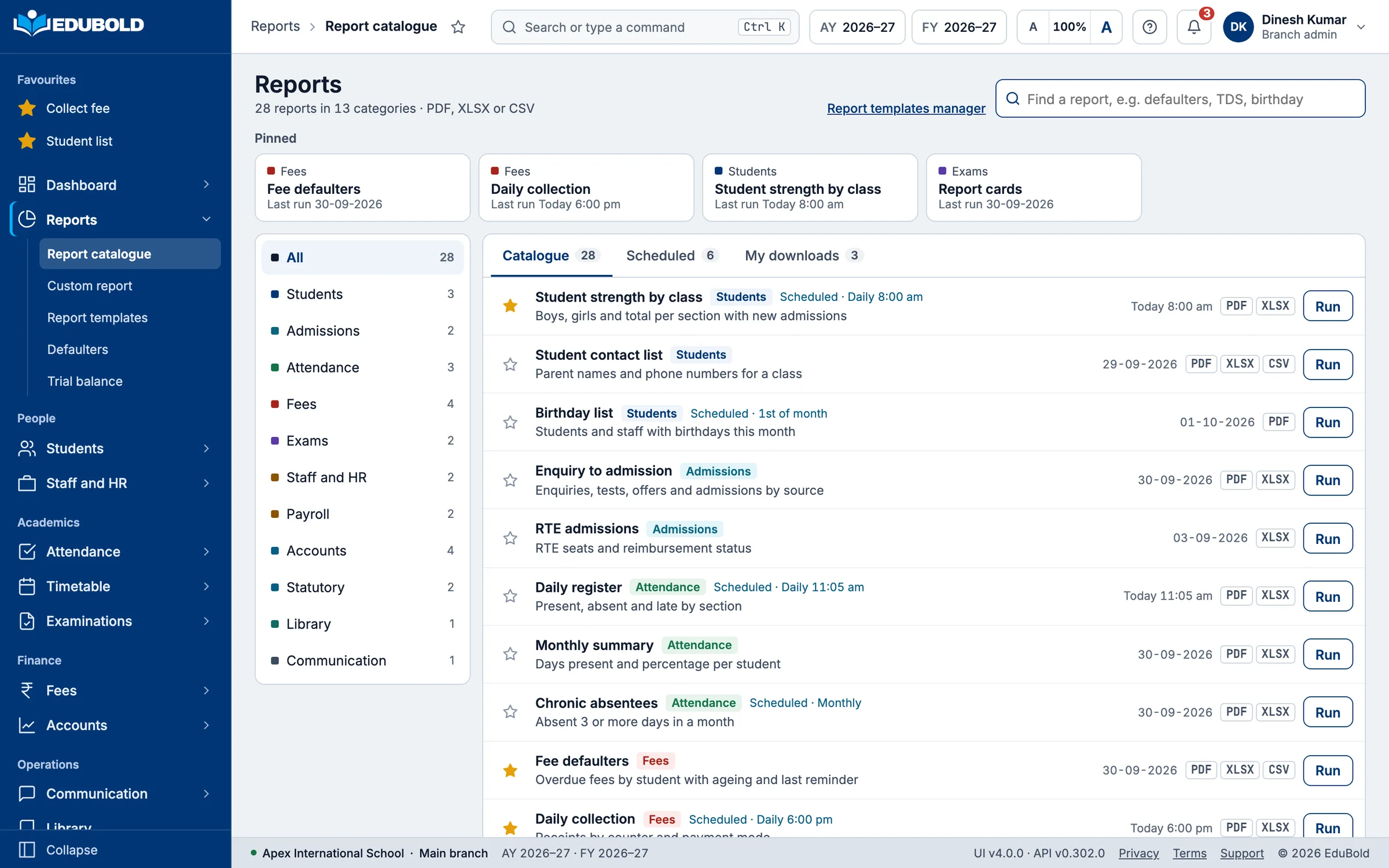
Mark and report/Short films
See it in under a minute.
Each film opens on its own page, with the worked example, the questions schools ask and the full transcript.
Next
Bring your hardest question.
Half an hour, on the problems your school actually has. Bring the thing your current system cannot do, and you will watch EduBold run it against your own rules before you decide anything.